
Rebranding
Ecommerce
Data-driven design
Increased trade-in conversion by 8.4%
A data-informed redesign of the trade-in journey to improve conversion

Turning trade-ins into more sales
Golf Avenue is a retailer that buys used golf clubs from customers and resells them. They saw trade-ins as a means to increase sales. Customers could sell or trade their old clubs to buy a new club at a lower price.
But too many users were leaving the trade-in journey before completing a transaction.
The challenge was to make the experience clear and compelling enough for more customers to complete their trade-ins.
Users were dropping off when they saw their offer
I analyzed Google Analytics to understand where users abandoned the flow. More than 90% completed club selection, but drop-off increased sharply after users saw their trade-in offer.
Customer feedback and support conversations pointed to the same issue: Users felt their trade-in offers were too low.
Improving the experience without changing what already worked
The data showed that users were moving through club selection successfully, with more than 90% completing this step. This is why I refreshed the UI of the club selection instead of changing the entire experience.
I reserved deeper UX changes for the offer stage, where the data showed a clear opportunity to improve conversion.
Visit Trade-in Page
Club selection
View offer
High drop offs
Cart
Checkout
The business already offered a trade-in bonus that most users missed
Golf Avenue already offered a 20% bonus on trade-ins, but users only saw it at checkout. Analytics showed that only around 10% of users reached checkout, meaning most left before seeing the extra value.

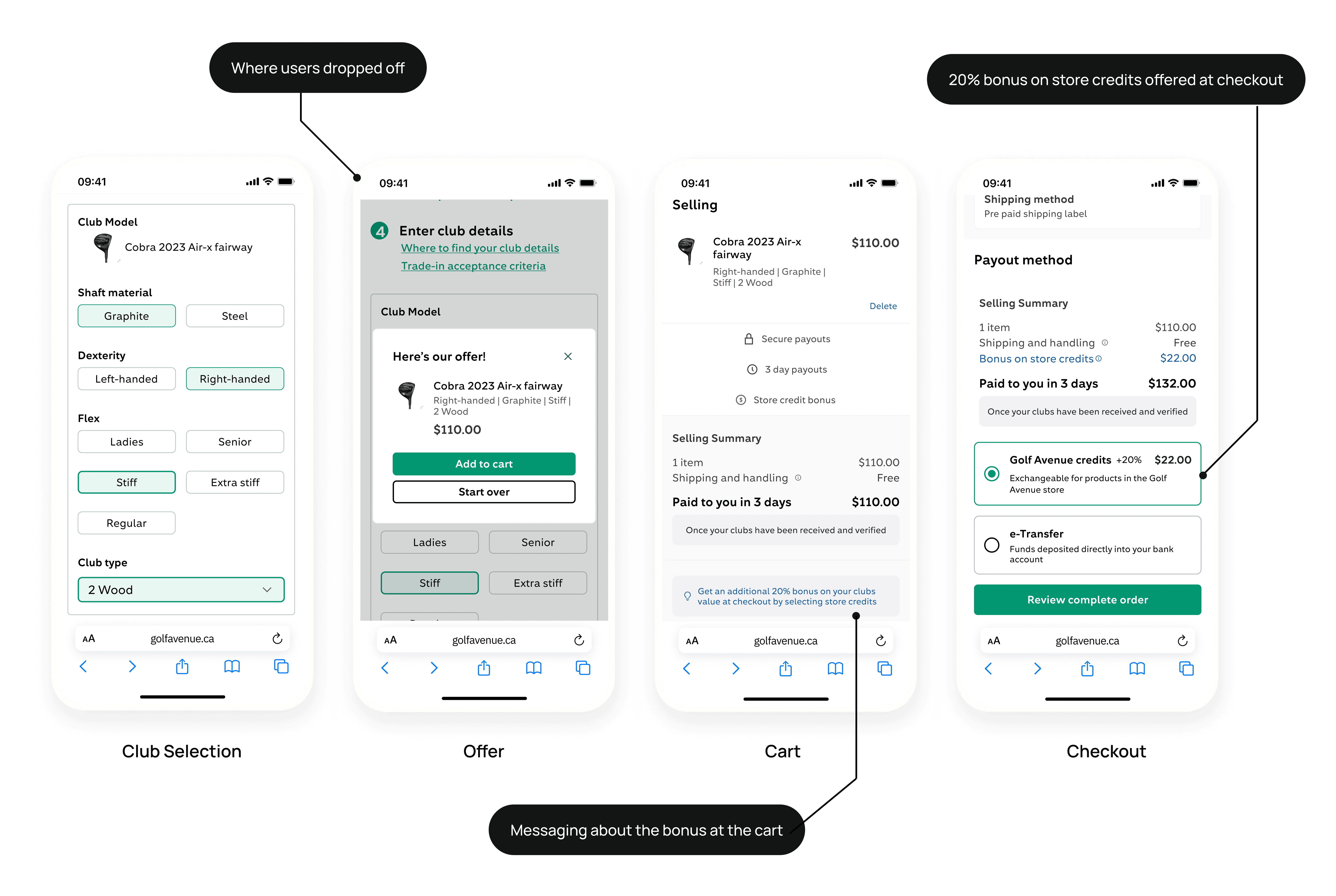
Redesigned the journey with new branding and full trade-in value up front
The redesign brought the new brand into the product experience and made the interface more consistent across the journey. A key part of the work was presenting the trade-in bonus earlier, so customers could better understand the value of their clubs before deciding whether to continue.

The solution that was technically complicated
I explored different ways to communicate trade-in value, including showing the effective value upfront and offering tiered options with different benefits.
After talking to developers I learned that we couldn't have dynamic pricing at checkout. So even if user selects the $132 option, checkout would show $110. So unfortunately this was left aside.

Could increase cognitive load and potentially lead to drop off
Technically not feasible to have dynamic pricing at checkout
The solution that avoided the technical feasibility
I designed this option to avoid complications at checkout. By presenting bonuses as add-ons, we wouldn't need to change checkout too much. The main risk was overwhelming users with too many choices, so I also explored a simpler version that stayed closer to the original experience.

No technical limitations
Could increase cognitive load and potentially lead to drop off
Final decision: Lowest risk and lowest effort
I designed this version as a simpler, faster solution that stayed closer to the original experience, reducing implementation risk.
Without time for usability or A/B testing, we had to make a decision based on the information available. In a fast-moving scale-up focused on revenue growth, we chose the lowest-risk option we could ship quickly, with plans to use post-launch data to validate the decision.

Simple and clear
Building the Design system along the way
This was one of the first projects to bring Golf Avenue's new brand into the product experience. I created components for the trade-in flow, including form fields, buttons, search results, and tooltips, with future reuse in mind.
I also collaborated with the designer responsible for the design system to incorporate these components into the shared library, helping extend the new visual language across the website.

Outcome and Impact
Users see the full value of their clubs earlier and can make a decision with all the information available.
Trade-ins increased and Sales increased in return.
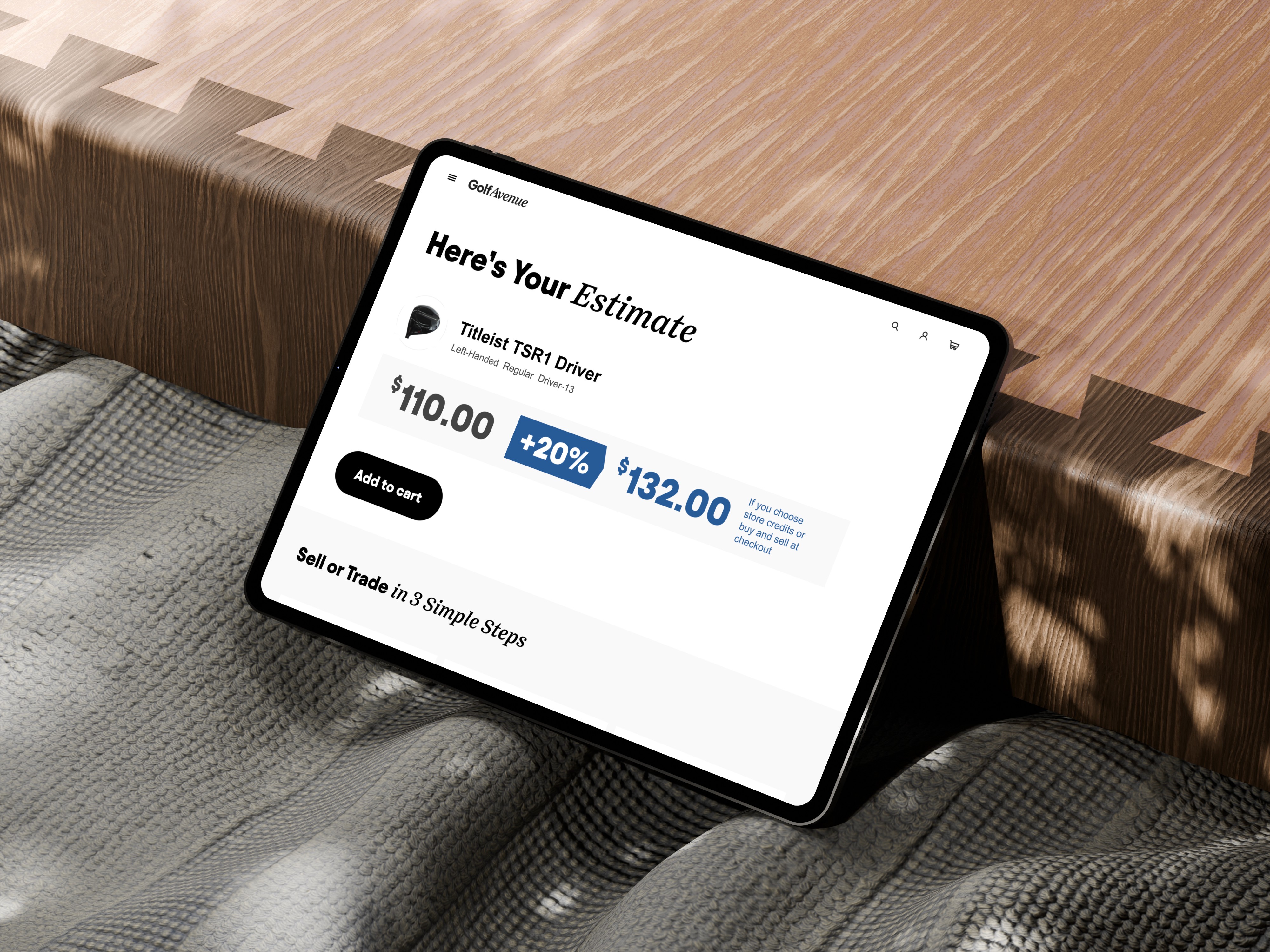
Balancing bold Ideas with business priorities
This work was done in a scale-up environment, where speed and revenue impact were critical. At the same time, “one of the company’s core values was to be bold and creative, so I explored and pushed alternative concepts to improve value perception. After reviewing feasibility, risk, and timelines with product and engineering, we agreed that driving revenue quickly was the priority.
Given the size and situation of the company at the time, I believe this was the best approach. It allowed us to ship fast, improve user confidence immediately, and support short-term growth, while keeping more creative ideas as future opportunities.